Who said dresses have to disappear the moment temperatures drop?
Winter dresses can be just as warm, practical, and polished as your favorite jeans-if you choose the right fabrics, silhouettes, and layers.
From cozy knits and wool blends to sleek sweater dresses and cold-weather maxis, the best winter dresses work hard without sacrificing style.
This guide breaks down what to wear, how to layer it, and the styling tricks that keep you looking chic when the forecast says otherwise.
What Makes the Best Winter Dresses: Warm Fabrics, Flattering Silhouettes, and Cold-Weather Details
The best winter dresses do more than look polished; they help you stay warm without piling on bulky layers. Start with fabric: wool blends, cashmere knits, ribbed cotton, ponte, fleece-lined jersey, and heavier sweater knits hold shape better and provide more insulation than thin polyester or lightweight viscose.
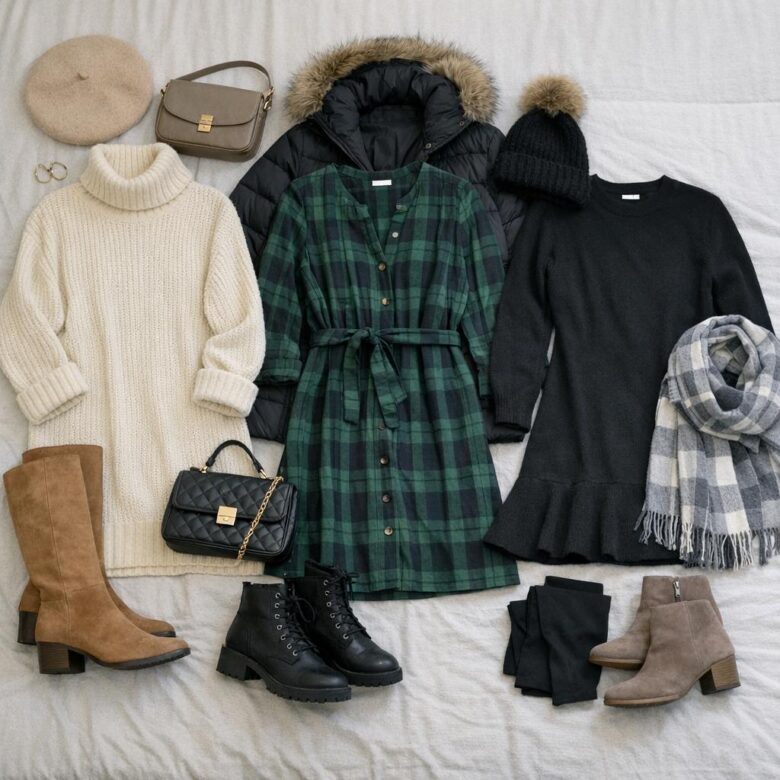
Silhouette matters just as much. A midi sweater dress with a slightly defined waist is often more practical than a loose mini dress because it gives coverage, works with thermal tights, and still looks refined with knee-high boots. For example, a black ribbed midi dress, fleece-lined tights, and leather ankle boots can move easily from a cold commute to a casual office dinner.
- For everyday wear: choose knit midi dresses, turtleneck dresses, or long-sleeve wrap dresses.
- For work: look for ponte or wool-blend dresses with structure and a lining.
- For events: velvet, satin-lined knits, or long-sleeve maxi dresses feel dressy without sacrificing comfort.
Pay attention to cold-weather details: higher necklines, full-length sleeves, thicker hems, and enough room to layer a thermal base layer underneath. When shopping online, filters on platforms like Nordstrom or ShopStyle help compare fabric content, price, and customer reviews, which is useful for judging cost per wear before buying.
A practical rule: if the dress only works with one coat or one pair of shoes, it may not be the most versatile winter wardrobe investment. The strongest options pair easily with insulated boots, wool coats, scarves, and weather-appropriate accessories.
How to Style Winter Dresses for Cold Weather with Layers, Tights, Boots, and Outerwear
The easiest way to make winter dresses wearable in cold weather is to build warmth in thin, comfortable layers instead of relying on one bulky coat. Start with a fitted thermal base layer or lightweight merino wool top under sweater dresses, knit dresses, and long-sleeve midi dresses, especially if you commute or spend time outdoors.
Tights matter more than most people think. For daily wear, choose fleece-lined tights or opaque thermal tights, and for dressier outfits, layer sheer black tights over nude thermal tights for warmth without losing a polished look.
- Ankle boots work well with midi sweater dresses and ribbed knit dresses.
- Knee-high boots add warmth under wrap dresses or shirt dresses.
- Waterproof insulated boots are best for snow, slush, and long walks.
For outerwear, match the coat length to the dress length. A wool coat that hits below the hem usually looks more expensive, while a belted puffer coat works better for casual winter outfits and practical city errands.
A real-world example: for a cold office day, wear a black knit midi dress with fleece-lined tights, leather knee-high boots, a thin HeatTech-style base layer, and a camel wool coat. Check the temperature and wind chill on AccuWeather before leaving, because a sunny 35°F day can still feel harsh if the wind is strong.
Small details also improve comfort: add wool socks inside boots, use anti-slip soles for icy sidewalks, and carry a compact lint roller if you wear dark knits. These little choices make winter dress outfits feel intentional, not just warm.
Common Winter Dress Styling Mistakes to Avoid for a Polished, Weather-Ready Outfit
One of the biggest mistakes is choosing a dress for looks alone and ignoring fabric weight. Thin jersey, satin, or lightweight cotton can work indoors, but they need support from thermal tights, a wool coat, and insulated boots if you’ll be commuting, walking, or waiting outside.
Another common issue is layering too much bulk in the wrong places. A chunky sweater over a loose midi dress can make the outfit look heavy, while a fitted turtleneck under a wool dress or a belted coat over a knit dress keeps the shape clean and intentional.
- Skipping weather checks: Use AccuWeather before choosing footwear; suede ankle boots are a bad idea on slushy sidewalks.
- Wearing the wrong tights: Sheer tights may look elegant, but fleece-lined or merino wool tights are better for real cold-weather outfits.
- Ignoring coat length: A cropped jacket over a long winter dress can feel unbalanced; knee-length or long wool coats usually look more polished.
A real-world example: for an office day with a knit midi dress, choose heat-retaining tights, leather knee-high boots, and a structured wool coat instead of a puffer that ends at the waist. It looks professional, feels warmer, and avoids the awkward “nice dress, wrong outerwear” problem.
Also, don’t overlook maintenance costs and practicality. Salt stains, wet hems, and delicate dry-clean-only fabrics can make a beautiful winter dress expensive to wear often, so check care labels and choose durable materials when building a cold-weather wardrobe.
The Bottom Line on Best Winter Dresses and How to Style Them for Cold Weather
The best winter dress is the one that works with your real routine-not just the forecast. Choose silhouettes you can layer without bulk, fabrics that hold warmth, and colors or prints that pair easily with your coats, boots, and tights. If you are buying one piece, make it a knit midi or long-sleeve dress that can shift from weekday to evening with a belt, taller boots, or a sharper coat. Cold-weather style becomes much simpler when every dress answers three questions: Is it warm enough, easy to move in, and versatile enough to wear more than once?

Dr. Clara Montgomery, Ph.D. in Textile Science and Fashion Psychology Dr. Clara Montgomery is a wardrobe consultant and researcher with over 11 years of experience studying how clothing impacts human behavior and confidence. She founded DressesByMe to transform the daily ritual of getting dressed into an empowering, stress-free experience. Combining the science of body symmetry, textile fit, and color psychology, Dr. Montgomery’s mission is to provide personalized styling frameworks and practical outfit planning guides, helping individuals curate a signature wardrobe that aligns beautifully with their lifestyle and personality.